
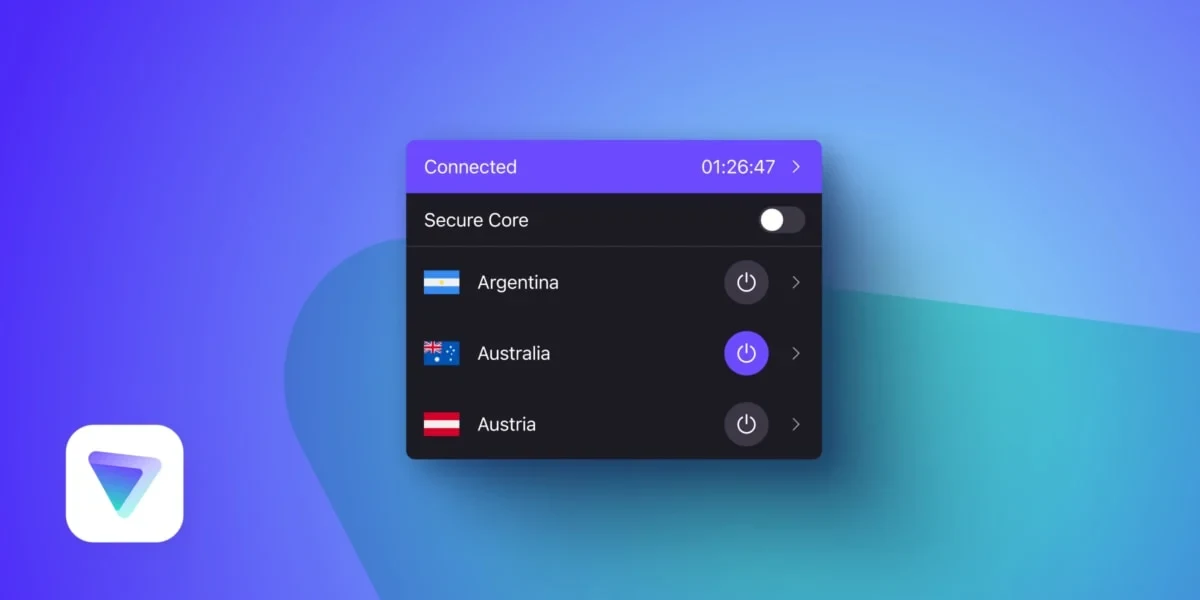
Have you ever felt that anxiety that your internet service provider is watching exactly what you’re streaming, throttling, or blocking your streams? Not fun. If you use our services on uPlay, you want complete privacy, right? Finding the best VPN isn’t just about speed, it’s about being invisible. We’ve run a rigorous best VPN 2026 test to find the winners for you. So, if you’re looking for the best VPN for anonymity, go with Proton VPN or Mullvad VPN. These are no-log VPNs that actually keep your data private, for real.
What’s the deal with VPNs for IPTV, anyway?
Imagine your internet service provider peering over your shoulder every time you start a movie or a game. Not so fun, is it? That’s exactly what happens without protection, and it’s often why your IPTV starts buffering right in the middle of the action, they simply throttle your speed because you’re streaming “too much.” With a top-rated VPN, your traffic becomes completely invisible, encrypted, and impossible for prying eyes to track. It’s not just about accessing content, but about regaining control over your own connection so that we at uPlay can deliver the quality you pay for without interruptions.
Types of VPNs You Need to Know About
The market is flooded with options, but let’s be honest, there are really only two types you’ll come across when looking for a winner in a best VPN 2026 test. You have the free services that often sell your data to stay in business, and then you have the premium services that make their living by protecting you. For IPTV use, only the latter category matters if you want to avoid lag and surveillance, since free options rarely provide the bandwidth required for HD streaming.
- Free VPN - Often slow, full of ads, and they save your logs to sell them.
- No-log VPNs - Premium services like Proton and Mullvad that delete everything immediately.
- Best VPNs for anonymity - Services that accept cryptocurrency and don’t require an email address.
- Enterprise VPNs - Built for office work, not for streaming or personal privacy.
This is why we strongly advise against free solutions.
Why it matters which one you choose
Making the wrong choice here is about more than just missing the final minutes of the game because of buffering. A bad service can actually leak your real IP address straight to copyright lawyers or your internet service provider, which defeats the entire purpose of getting protection in the first place. It’s the difference between being completely invisible and walking around with a neon sign on your back that screams “here I am.” If you use a service that isn’t one of the best VPNs for anonymity, you risk having your browsing history stored for years.
If you take it a step further, your choice of provider affects your entire digital life, not just when you’re watching uPlay. A top VPN must be able to handle heavy data streams without slowing down your connection; otherwise, your 4K experience will quickly turn into a grainy mess, and we certainly don’t want that. Plus, if you happen to choose a provider that keeps logs, there’s a digital paper trail that can be requested later, so always go for transparency and proven security, like with Mullvad or Proton, so you can sleep soundly at night.
My Top Tips for Choosing the Right VPN for IPTV
It’s easy to get lost in the jungle of technical terms, but when you’re looking for the best VPN specifically for IPTV, it really comes down to just three things: speed, privacy, and stability. You don’t want the stream to buffer just when the game gets exciting simply because the server is overloaded.
- Always go with a no-logs VPN so your activity stays private.
- Check that the provider supports the WireGuard protocol for maximum performance.
- Make sure there’s a dedicated app for your device, whether it’s Android TV or Firestick.
Realizing the importance of choosing a provider that actually owns its own infrastructure can be the difference between a choppy stream and perfect HD quality.
No-Logs Policy: Why It’s an Absolute Must
Let’s be honest: if your VPN service logs your activity, the whole point of getting one is lost. In the search for the best VPN for anonymity, a strict no-logs policy is your only real safeguard against your data being sold or disclosed. This means that even if someone were to knock on the VPN company’s door and demand information, there’s simply nothing to give them, an empty archive. That’s exactly the level of security you need when using services like uPlay.
Privacy and Security: Don’t Compromise on These!
Many people fixate on price, but in our Best VPN 2026 Test, it becomes painfully clear that cheap services often skimp on basic protections. You need features like a Kill Switch that cuts off your internet connection immediately if the VPN connection falters; otherwise, your real IP address will leak before you can even blink. Without strong encryption and leak protection, you’re essentially unprotected, which means your internet service provider can see exactly what you’re streaming and potentially throttle your speed. Security isn’t just about hiding, it’s about ensuring the quality of your experience. When we talk about encryption at this level, think AES-256 or ChaCha20, we’re talking about the same technology banks use to protect transactions. This is critical because many internet service providers today actively search for IPTV traffic to slow it down, a practice known as throttling. By encapsulating your traffic in an impenetrable tunnel, your ISP sees only noise, not that you’re watching a 4K movie on uPlay, and that’s how you maintain both your privacy and your lightning-fast speeds night after night.
Step-by-Step Guide to Setting Up Your VPN for IPTV
Did you think this would be complicated? Not at all. Getting started is actually a breeze, whether you’re using a Smart TV or an Android box. It’s mostly about making the right choice from the start and then just going with the flow. For those of you who really want to dive deep into the security aspect, you can read more about The Most Private VPN: 2025’s Best No-Log VPNs to Stay Anonymous, but otherwise, just follow along here and we’ll have the installation sorted in no time. The most important thing is that you don’t skip any steps.Comparison of Key Features
Getting Started: Choose the Right Provider
It really all comes down to what you value most right now. Do you want the best VPN that balances security with awesome user-friendliness and servers everywhere? Then Proton VPN is your best bet, since it’s backed by Swiss legislation. But if you’re the type who wants to pay with cash and refuses to even provide an email address for maximum anonymity, then you should check out Mullvad. Both work flawlessly with uPlay, so it mostly comes down to your personal preference regarding privacy versus convenience.
Easy Installation
Once you’ve made up your mind, half the work is done. Go to the provider’s website or your device’s app store and download their official app. Log in with your credentials, or your code if you’re using Mullvad, and find a server. A tip is to choose a server close to you for the best speed when streaming IPTV, so you avoid buffering in the middle of the game.
Don’t forget to take a quick look at the settings before you start your first stream. Make sure the protocol is set to WireGuard, it offers the absolute best performance for IPTV right now and is supported by both Proton and Mullvad. And for heaven’s sake, turn on the “Kill Switch” feature. It’s your lifeline that cuts off your internet connection immediately if the connection wavers, so you never accidentally leak your real IP address while watching.
Things to Consider Before You Decide
Before you pull out your credit card and commit to a subscription, you need to pause for a second, because there are pitfalls here. It’s not just about which logo looks the best or who shouts the loudest in the ads. You need to know exactly what your priority is, because no service is perfect at absolutely everything. If you’re going to do heavy IPTV streaming, it requires different capabilities than if you just want to read the news anonymously at a café. So take a look at the list below and think about what matters most for your specific setup:
- The ability to actually be the best VPN service specifically for lag-free streaming.
- That the provider lives up to the title of best VPN for anonymity by not requiring personal information.
- How the service performs in every reputable best VPN 2026 test in terms of speed.
- The guarantee that it’s a genuine no-logs VPN that’s been audited by a third party.
The most important thing is to match the VPN service’s strengths with your own requirements.
Speed and Performance: Why It Matters
Buffering is the absolute killer of all entertainment. It doesn’t matter how secure your connection is if the game stutters right at the penalty kick or if the movie pauses every ten seconds. For those of us who use IPTV, speed isn’t a luxury, it’s a necessity. You need a provider that can handle heavy 4K streams without breaking a sweat and without throttling your bandwidth. Modern protocols like WireGuard are practically a must these days to keep things running smoothly.
Device Compatibility: Keep Your Devices Happy
You don’t just watch on your computer, do you? Exactly, most of us watch IPTV via an Android box, a Firestick, or directly through an app on the TV. It doesn’t help if a VPN is super secure on Windows if it’s a total nightmare to get it working on your Nvidia Shield in the living room. You want a service that offers dedicated, sleek apps designed specifically for your hardware so you don’t have to spend a Friday night fiddling with manual configuration files.
And this is where the wheat really separates from the chaff. Proton VPN, for example, has put a lot of effort into building user-friendly apps that work seamlessly with your TV’s remote control, which makes life significantly easier for us mere mortals. Mullvad is incredibly secure, but can sometimes require a bit more manual tweaking depending on which platform you’re using, even though they’ve improved in this regard. Always check that the provider allows enough simultaneous connections as well, you want to be able to protect your phone, tablet, and TV box all on the same account without getting kicked off in the middle of a broadcast.
Pros and Cons: Is a VPN Worth It for IPTV?
Internet speeds have really skyrocketed lately, but that doesn’t help much if your provider throttles your connection as soon as you start a 4K stream. Using IPTV without protection is a bit like driving a car without a seatbelt, it’s fine until it isn’t. The question you need to ask yourself is whether the small extra cost and the technical hassle are worth the freedom to watch what you want, when you want, without anyone looking over your shoulder. It’s not just about paranoia, it’s about actually getting the experience you’re paying for.
The Upside: The Benefits of Using a VPN
The absolute best part is that you avoid that endless buffering, which is usually caused by your internet service provider deliberately throttling IPTV traffic to save bandwidth. When you encrypt your data, they only see “noise” and can’t throttle your speed, giving you a smooth stream even at the highest resolution. Plus, you unlock a whole world of content that might otherwise be geo-blocked, so you actually get your money’s worth from your subscription and can watch games that would otherwise be blacklisted in your region.
The Downsides: What You Should Watch Out For
Let’s not beat around the bush: encryption requires processing power, which inevitably takes a small bite out of your total speed, sometimes around 10-20%, depending on the protocol. If you already have a spotty connection, this can be noticeable, especially if you choose a provider that overloads its servers. It also requires you to install an additional app on your device, which can feel a bit of a hassle at first if you’re not very tech-savvy or if your set-top box has limited storage space.
Another common problem arises if you stream IPTV directly through a Smart TV app on a Samsung or LG, since these systems rarely support VPN apps directly in their menus. In that case, you’ll have to go into your router’s settings to configure the protection there, which is significantly more complicated than just clicking a button in an app. Free VPN services are also a trap in this context, they often log your data to sell it on, which renders the whole point of privacy completely meaningless and can even make your stream slower than it would be without one.
Common Misconceptions About VPN Services
Have you also heard that a VPN makes you 100 percent invisible to absolutely everyone online? That’s probably the most common myth we come across, and unfortunately, it’s not entirely true, no matter what the ads say. Many people also believe that encryption automatically means the internet becomes as slow as molasses, but with modern protocols like WireGuard, that’s actually rarely the case anymore. It’s mostly about choosing the right tool and understanding that a VPN protects your data, but it’s not a magical cloak of invisibility against everything and everyone.
Do you really need one for IPTV?
Do you think your regular internet connection might be enough for streaming? The problem is that internet service providers often throttle your speed as soon as they see you’re watching IPTV, which leads to that annoying buffering right in the middle of the game. Without a good VPN, your ISP can see exactly what you’re watching. By encrypting your traffic, they’ll only see meaningless data noise instead of your stream, which means you’ll avoid both blocking and unnecessary lag when it matters most.
Clearing Up the Confusion
Is it illegal to use technology to protect your privacy? Absolutely not. There’s often a strange stigma surrounding VPN services, as if they’re only for people who have something to hide, but it’s really about digital self-defense. Using Proton or Mullvad is just as legal as drawing the curtains at home. You’re simply protecting your own privacy from prying eyes, and that’s a right you shouldn’t hesitate to exercise for a better experience.
The biggest mistake many people make is confusing “free VPNs” with real security services, because the difference is enormous when it comes to your security. If you don’t pay for the service, it’s usually you who are the product, with your data being sold to third parties to finance the servers. That’s why we harp so much on verified “no-logs” policies from providers like Mullvad and Proton, because that’s the only guarantee you have that your activity actually stays between you and the screen; nothing else really matters.
Best VPN for IPTV in 2026: No-Logs, Privacy & Full Confidentiality
Once you settle into the couch to enjoy uPlay, you want to know that no one is looking over your shoulder. That’s exactly why the search for the best VPN is about more than just speed, it’s about your digital freedom. In our Best VPN 2026 test, it becomes painfully clear that if you’re looking for a true no-logs VPN, there are really only two winners worthy of the name. Choose Proton VPN for a seamless all-in-one solution, or go with Mullvad if you’re looking for the best VPN for anonymity, where absolutely no one knows who you are. No matter which one you choose, you’ll truly secure your streaming.